
Restaurants and Commercial Kitchens

Commercial kitchen heat recovery systems

Restaurant energy efficiency systems can capture thermal energy from kitchen exhaust and reuse it for an approved demand such as hot water, makeup air, or another heating load. 

BUILT FOR THIS EXHAUST

Kitchen exhaust heat recovery for grease laden airstreams

The opportunity depends on the exhaust temperature, hours, airflow, heat demands, layout, and local energy costs.

Kitchen exhaust heat recovery has historically been challenging because grease, moisture, and particles can accumulate on dense heat transfer surfaces. Lepido® technology was originally developed in Sweden for demanding restaurant and commercial kitchen exhaust. Its open, finless geometry is designed to encourage contaminants to pass through rather than progressively block airflow.

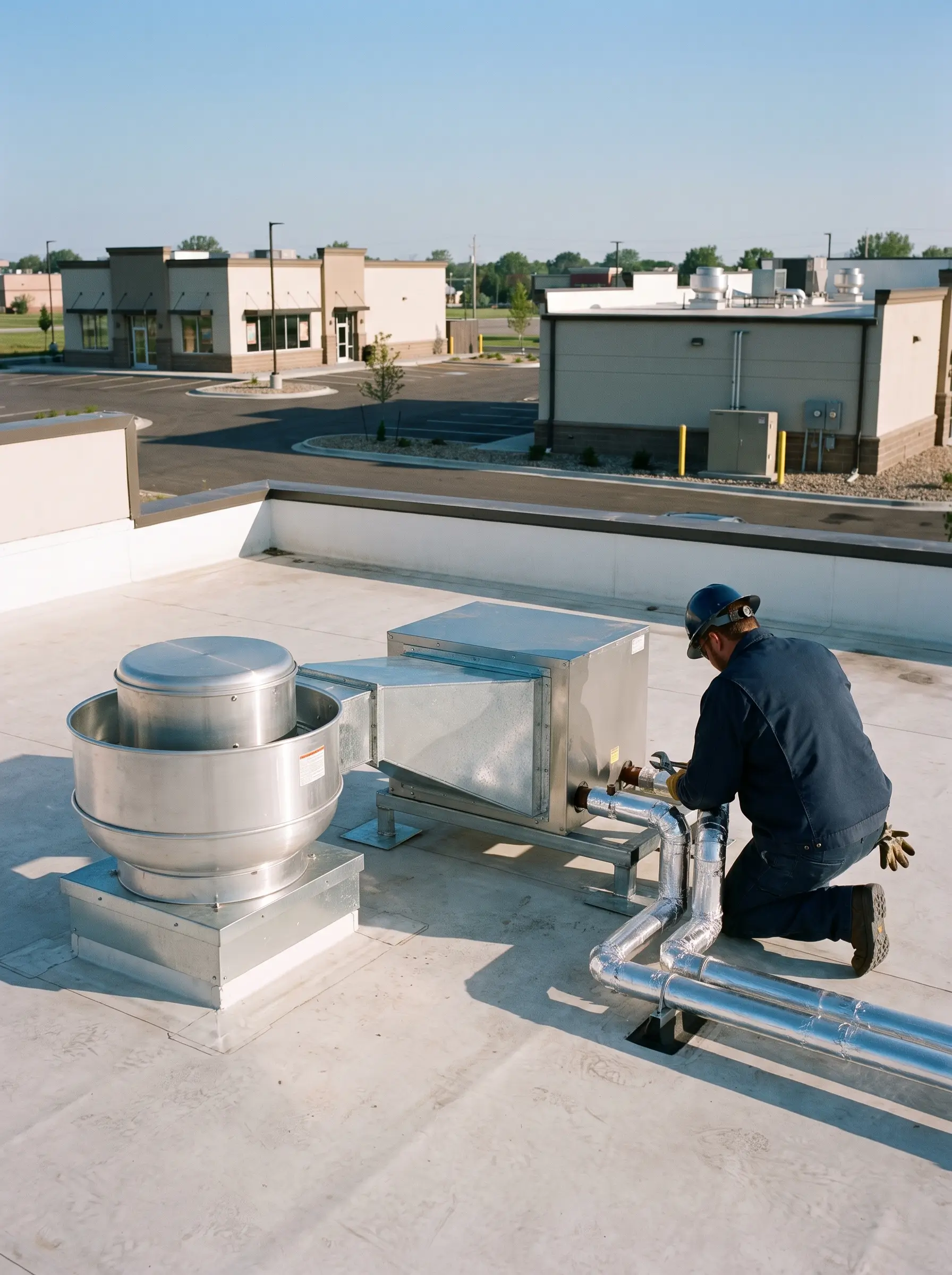
Lepido heat recovery unit installed on a restaurant rooftop
THE TWO SIDES NEVER MIX

Separate the exhaust from the load

A closed fluid circuit transfers recovered energy to the delivery side without mixing kitchen exhaust with the receiving water or air.

This architecture can support recovery from greasy kitchen exhaust while maintaining physical separation between the source and the useful load.

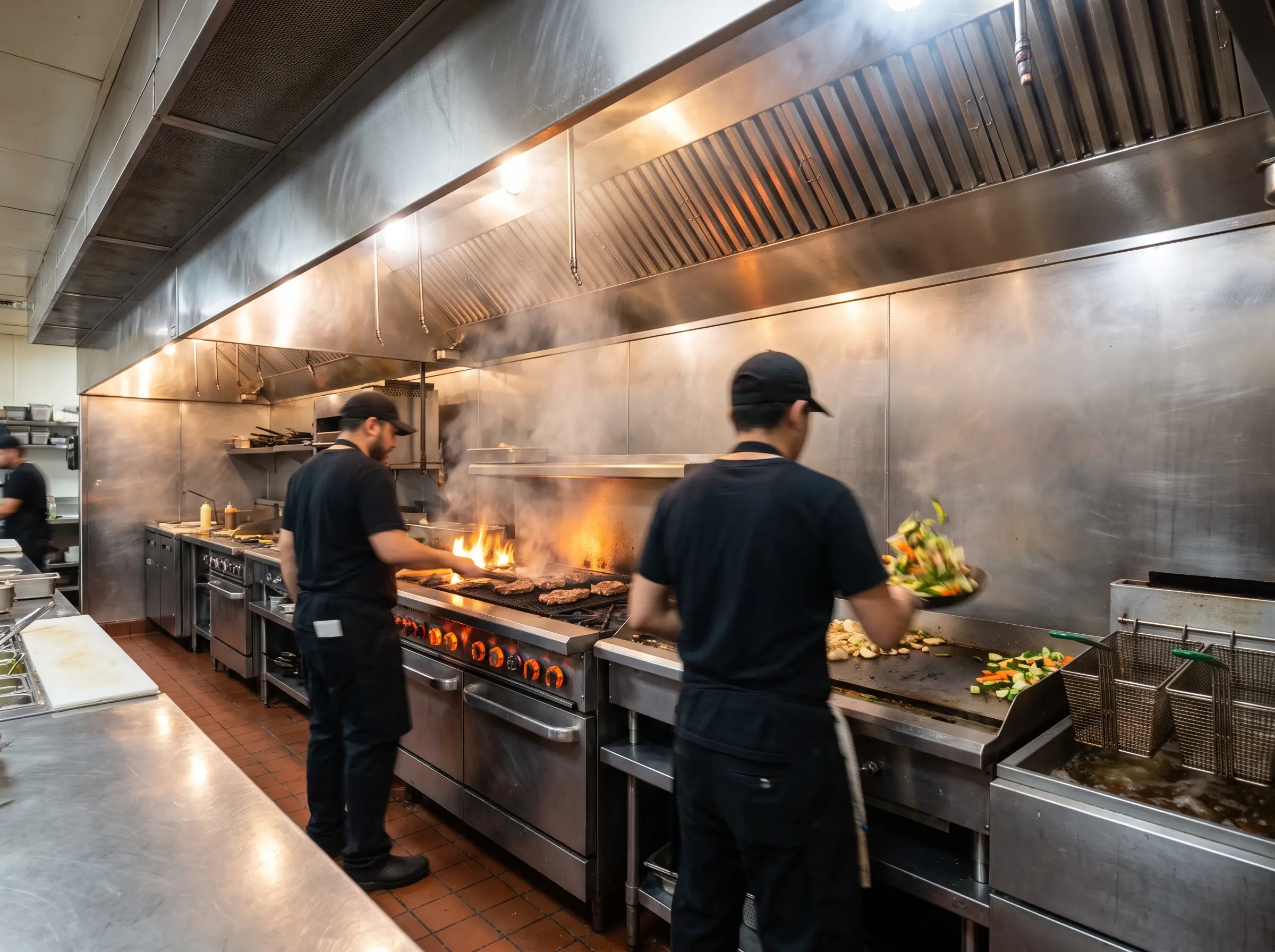
Cooks working in a restaurant kitchen
WHAT DECIDES THE CASE

Measure the business case

Commercial kitchen energy savings depend on useful energy delivered and the cost of the energy displaced. A strong assessment considers meal volume, exhaust operation, hot water or air demand, equipment, space, installation, maintenance, and potential program support. ThermStar can help identify the information needed for a preliminary case.

ONE SITE OR A WHOLE CHAIN

Commercial facility applications

Commercial energy efficiency opportunities may exist in individual restaurants, institutional kitchens, hospitality facilities, food service groups, and other operations with repeated kitchen loads. A multi location organization can screen several sites to identify the strongest candidates before committing to detailed evaluation.
Measure the business case
Commercial facility applications
NEXT STEP

Start with a short screen

Describe the kitchen, operating hours, exhaust equipment, and potential heat demand. ThermStar will determine whether the application appears suitable and what technical data should be reviewed next.

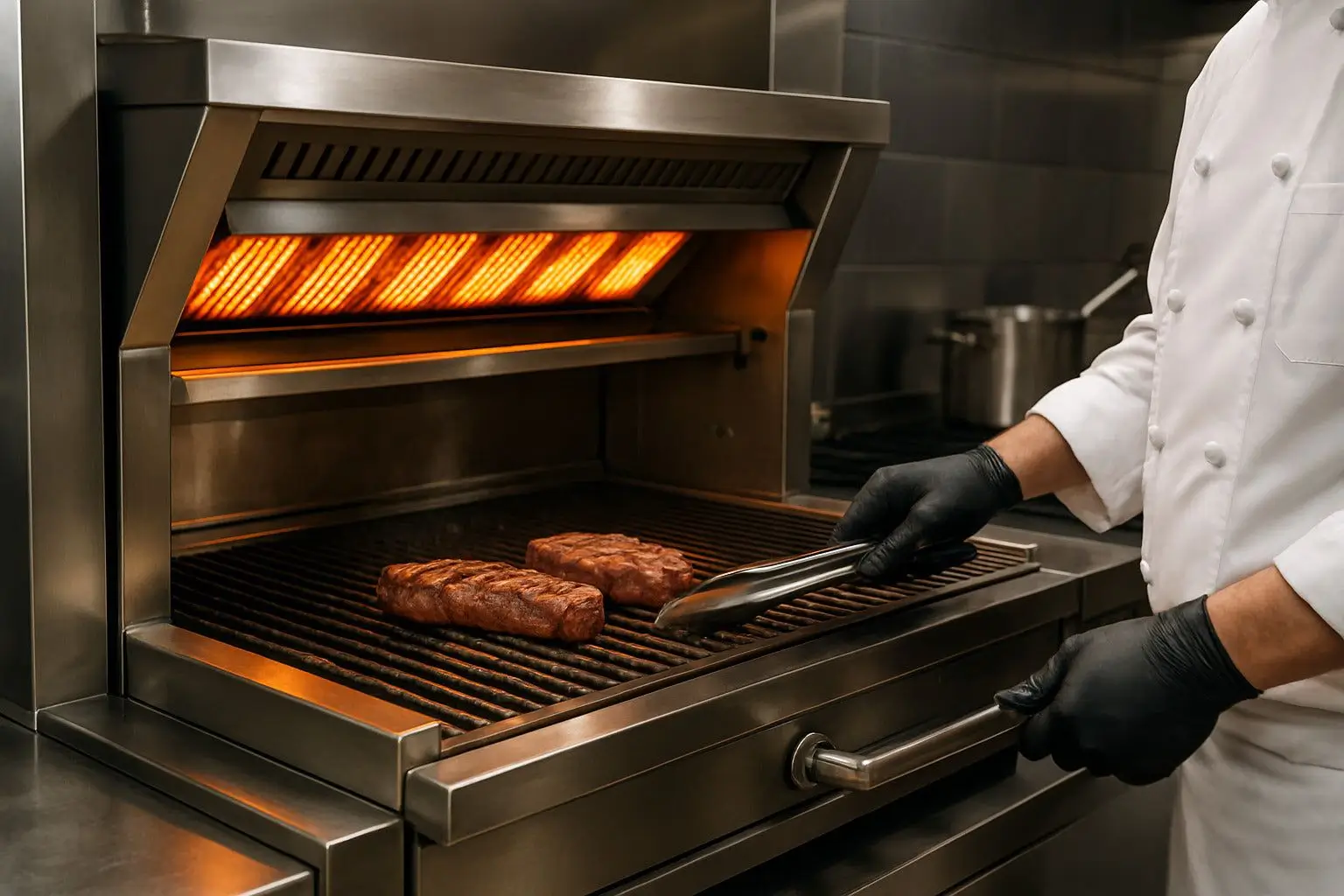
Commercial kitchen broiler
get started

What happens next

A first conversation helps ThermStar understand the operating goal, the facility context, and the people involved in the decision.

From there, the team can identify the smallest useful information request and determine whether a screen, technical review, partner discussion, or document request is appropriate.

This approach keeps the process proportionate to the opportunity while giving operations, finance, engineering, health and safety, and sustainability stakeholders clear information for the next decision.

Engineer working at an office desk
COMMON QUESTIONS

What to know before you start

What makes a commercial kitchen heat recovery project viable

The strongest candidates have a consistent thermal source, a productive receiving load, useful temperature alignment, overlapping operating hours, workable integration, and enough displaced energy value to support the project. A high exhaust temperature by itself is not sufficient.

Possible uses include approved process air, makeup air, process water, domestic hot water, boiler feedwater, and other thermal demands. The selected use must be compatible with the available temperature, capacity, schedule, location, controls, and facility requirements.

Yes. An organization can begin with a portfolio screen using consistent information from multiple sites. ThermStar can help identify which locations deserve deeper review. Findings from one project may inform later work, but each facility still requires confirmation.

Savings are based on useful recovered energy and the energy it displaces. A project specific method may use temperature, fluid flow, operating time, equipment status, baseline efficiency, and approved conversion factors. Actual reporting depends on the installed monitoring and any utility or internal requirements.