

Heat exchanger fouling, maintenance and long term performance
Heat exchanger fouling can increase resistance, restrict airflow, reduce thermal transfer, and raise cleaning needs. A blocked plate heat exchanger may affect both the recovery project and the process serving the exhaust.
How fouling in heat exchangers reduces recovery
Plate fouling and dense fin accumulation can be significant in particle-laden exhaust. The alternative is not better cleaning, it is a surface that gives particles nowhere to bridge.
It starts as pressure, not output
The first symptom is resistance, and the fan absorbs it quietly. Recovery is still nominally happening while the process behind it is already paying for the restriction.
Then it compounds
A narrowed passage collects faster than an open one. Every interval gets shorter than the one before it, which is what turns a maintenance line item into a maintenance problem.
Pressure and access
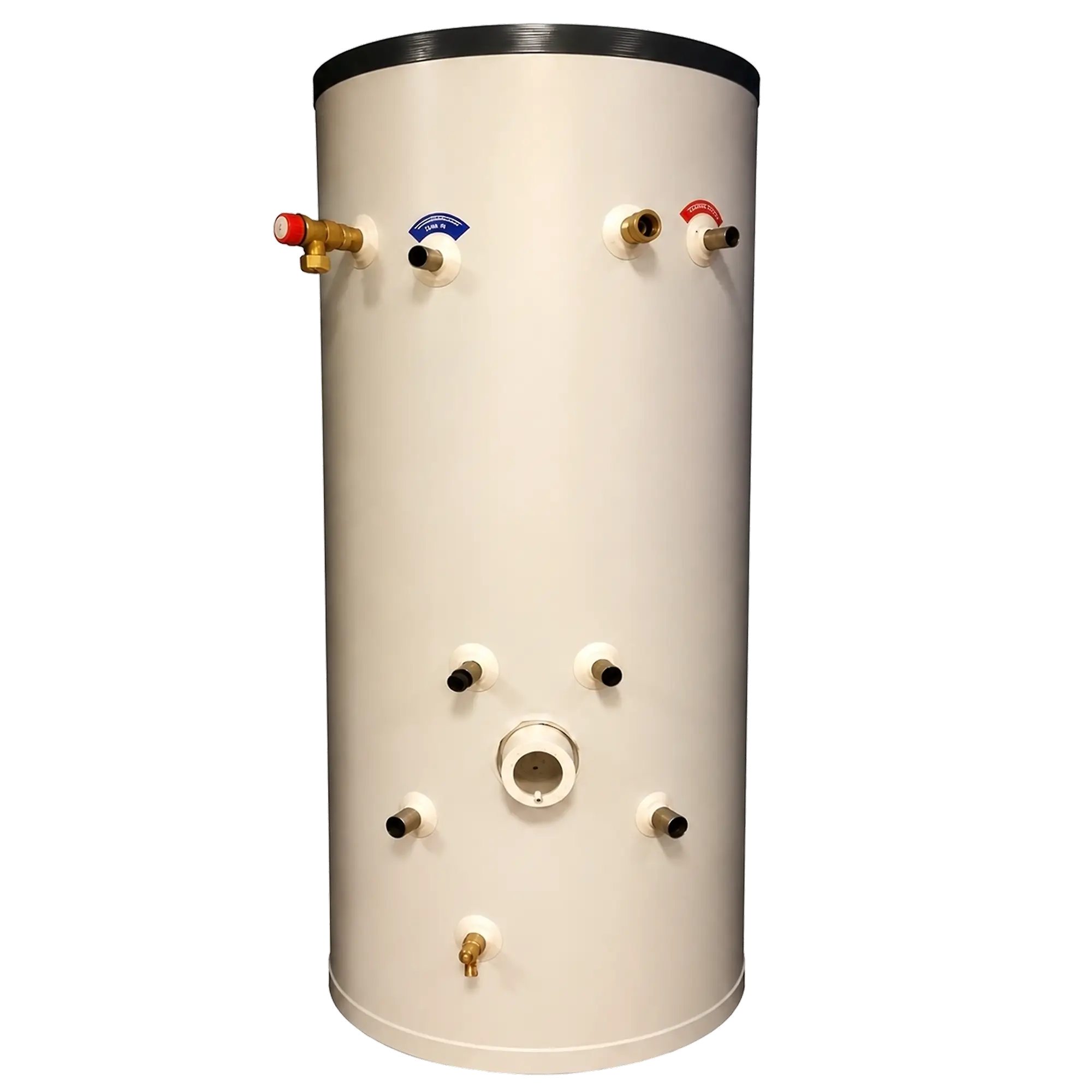
What the existing fan can give up, where a unit can physically go, and how it will be reached for service once production is running again.
When it runs
Operating hours and production variation. Energy available at three in the morning is only worth something if a demand is awake to take it.
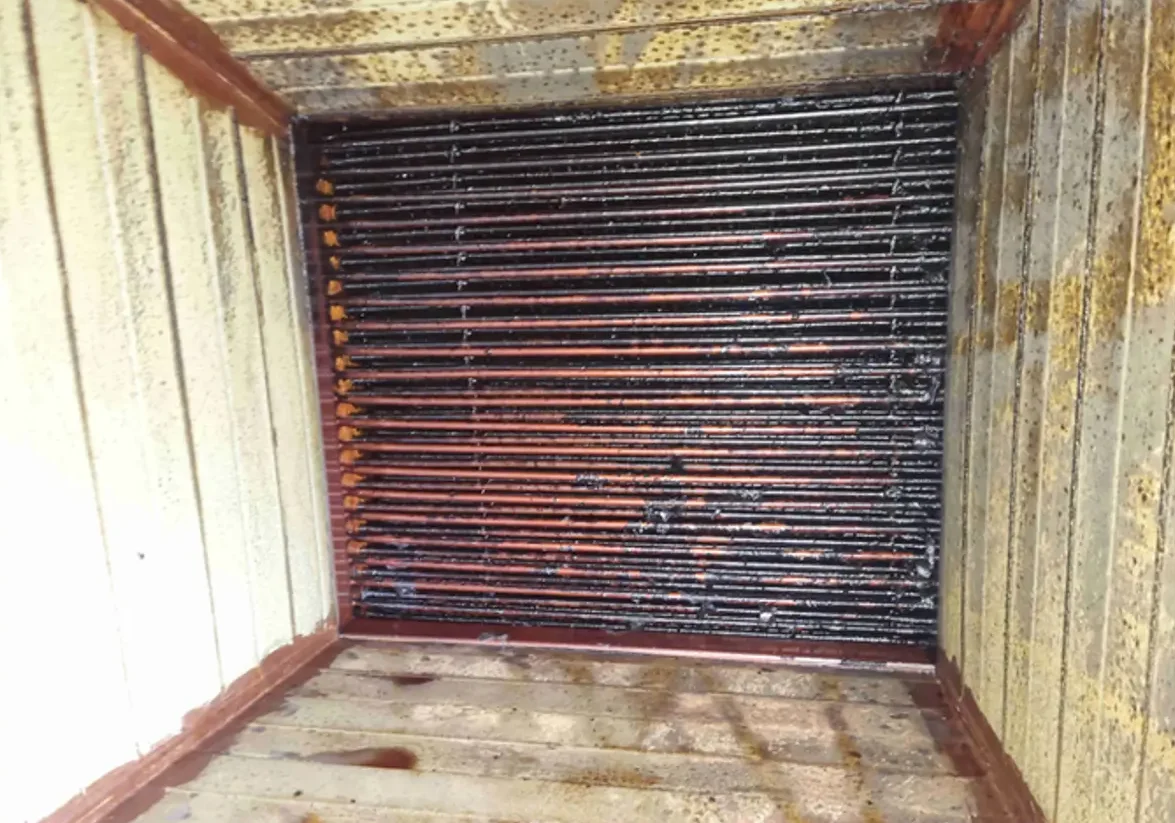
Internal view of the Lepido® from the exhaust inlet side after 22 months
Maintenance planning
The consequences of fouling in heat exchanger equipment should therefore be considered in performance estimates, maintenance planning, and lifecycle economics.
No thermal system should be treated as maintenance free. What the interval actually depends on:
Exhaust composition
Grease behaves differently from lint, and both differ from foundry dust.
Operating schedule
Hours per week, and whether the unit ever gets a cold period.
Access
Whether service needs a shutdown, a lift, or neither.
Water quality and fluid condition
On the clean side, the thing most often forgotten until it matters.
Sensors, pumps and valves
The moving and measuring parts, which have their own schedules.
Connected equipment
What else the interval has to be coordinated with.
Not transferable
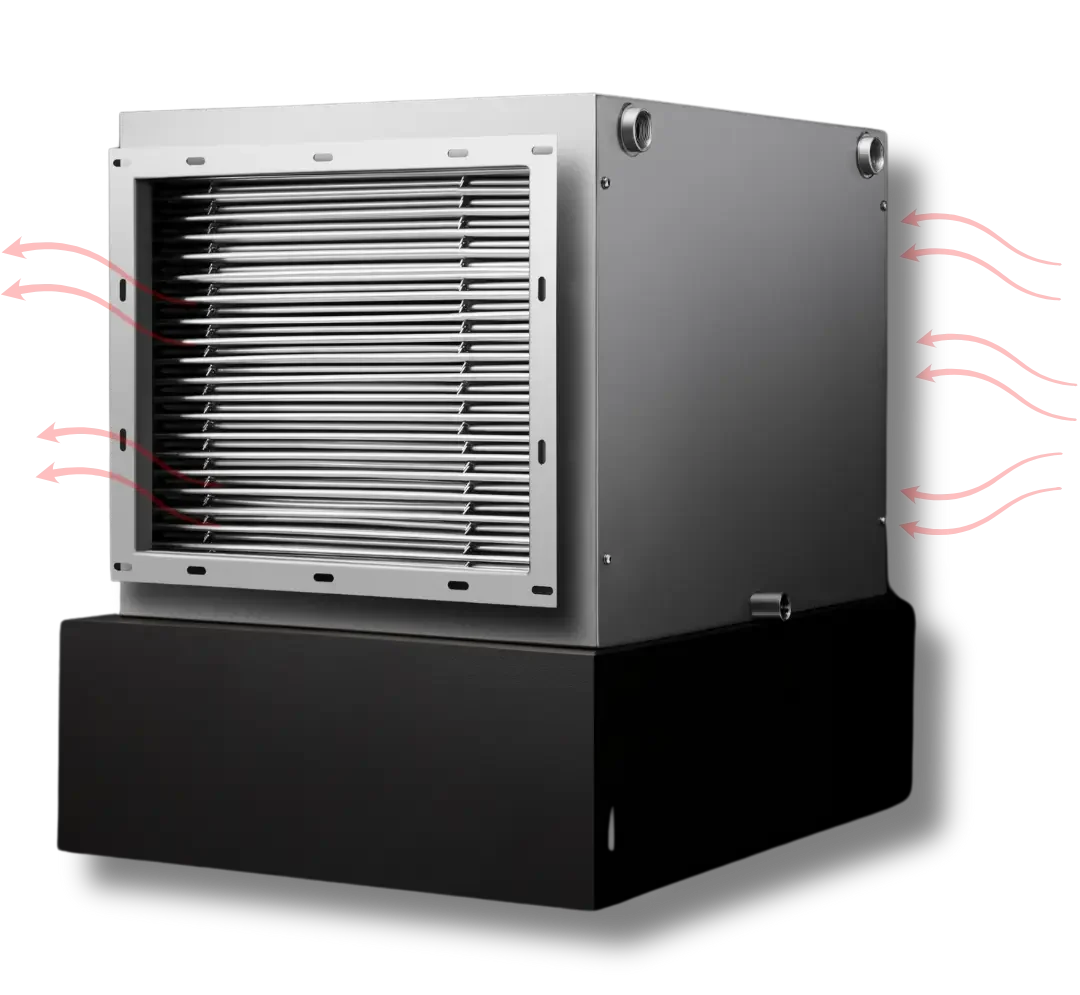
Air cooled heat exchanger cleaning practices for unrelated equipment do not automatically apply to Lepido®. Guidance is project specific, based on the approved configuration.
Performance and economics
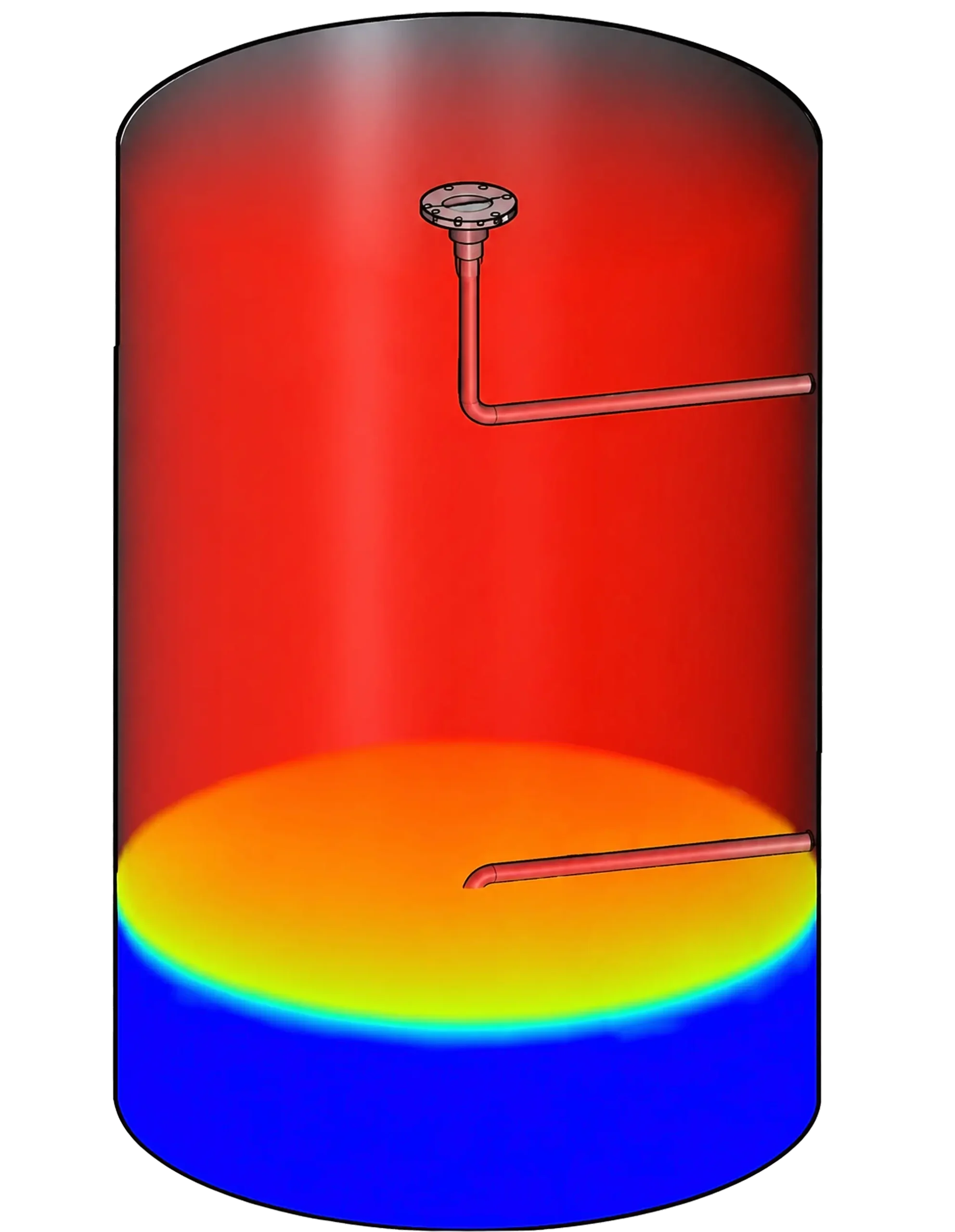
Recovered energy depends on source and demand conditions, system efficiency, controls, and hours of overlap. Useful heat can reduce the energy otherwise required to heat a process or improve boiler efficiency when it preheats approved feedwater.
Economic evaluation should consider installed scope, energy value, maintenance, operating costs, expected life, and any eligible incentive.
Technical specifications
Product dimensions, materials, capacity, temperature and pressure limits, fluid requirements, electrical needs, control points, and connection details must come from current ThermStar approved documents. Certifications, standards, patent references, and regulatory statements should also be confirmed for the specific product and market before publication or specification.
Evidence before claims
ThermStar uses operating experience, case studies, long term studies, and measured project data where approved. Customer specific data, drawings, configurations, prices, and performance remain confidential unless permission is provided. Contact ThermStar for the technical information appropriate to your application.

What is fouling in a heat exchanger and why does it matter
Fouling is the build-up of deposits from particle-laden exhaust on heat transfer surfaces. It can increase resistance, restrict airflow, reduce heat transfer, and raise cleaning needs. A blocked exchanger can affect the process that serves the exhaust as well as the recovery project, so fouling belongs in performance estimates, maintenance planning, and lifecycle economics.
How does fouling affect heat recovery performance over time
As deposits build up, pressure drop rises and less heat is transferred, so recovery falls and maintenance grows. Plate and dense fin exchangers are especially exposed in particle-laden exhaust. Lepido uses open, finless, staggered tubes designed to promote particle passage, for stable pressure drop and sustained heat recovery under approved conditions.
How is long term heat recovery performance determined
Performance depends on measured or confirmed source conditions, useful demand, operating overlap, equipment selection, control behavior, and installed conditions. Available sensors and monitoring can document temperatures, flow, status, operating time, and calculated thermal energy according to the approved method.
How much cleaning and maintenance does the equipment need
No thermal system is maintenance free. Inspection and service needs depend on the application, contaminants, operating schedule, access, water quality, fluid condition, and the sensors, pumps, valves, and connected equipment. Cleaning practices for other exchangers do not automatically apply to Lepido; ThermStar provides project specific guidance for the approved configuration.
How long is a heat recovery system designed to last
The ThermStar System™ is built for more than ten years of service, with components selected for daily thermal cycling and harsh exhaust conditions. Actual service life depends on the application, operating hours, cleaning and maintenance, so expected life is reviewed as part of each project.