

How the ThermStar System works
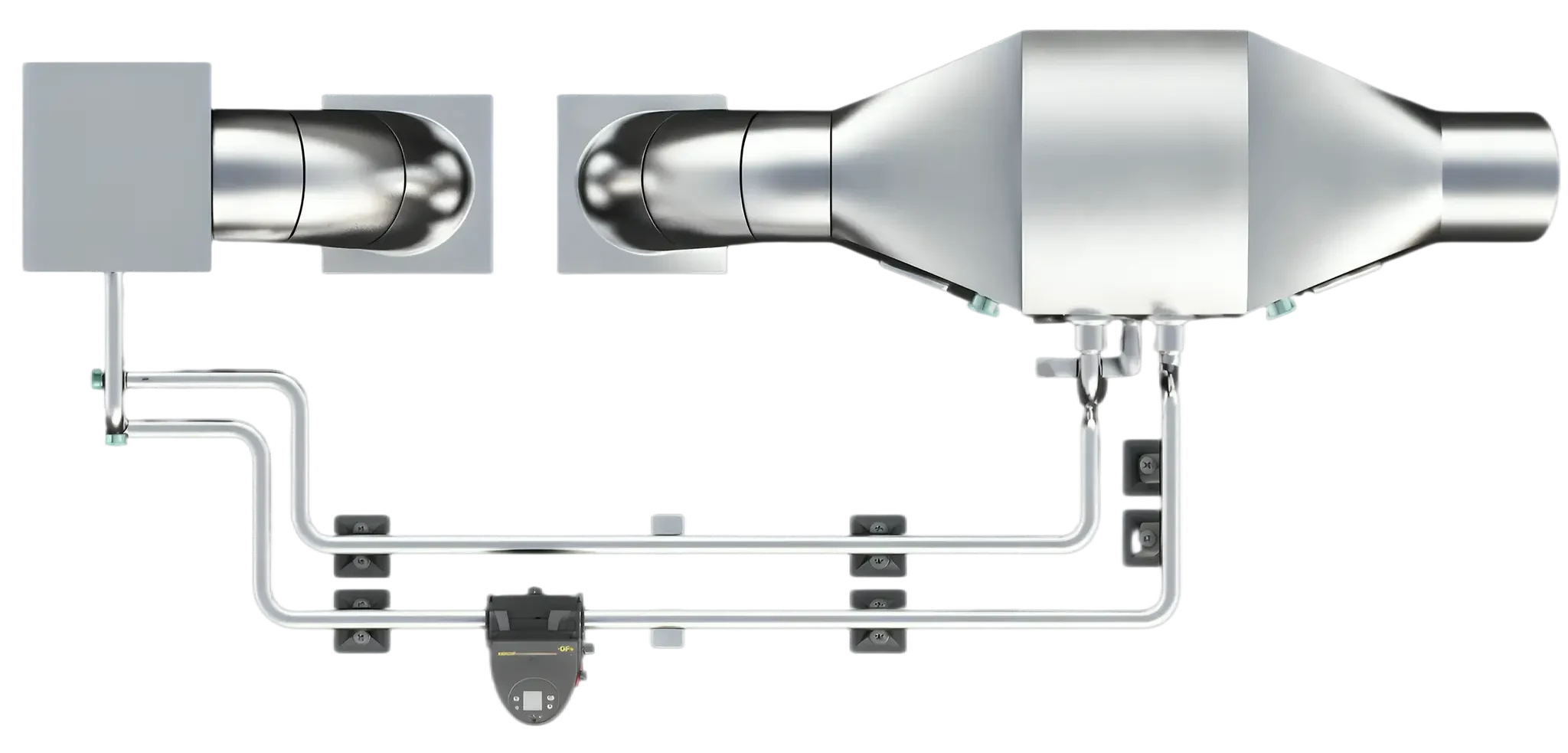
The ThermStar System™ converts energy from commercial or industrial exhaust through a Lepido® heat recovery unit. A heat transfer fluid carries that energy through a closed liquid-loop to one or more HeatCore Hx™ delivery units. The recovered heat can then serve an approved air, water, boiler, or process load without mixing the particle-laden exhaust with the receiving medium.
The system, end to end, and where each part is covered in full
Recovers energy out of particle-laden exhaust at the stack, without a filtration stage ahead of it.
Heat transfer fluid carries the energy to where the demand is. The two fluids never mix.
Hands the energy to an approved air, water, boiler or process load. Seven delivery targets.
Logic, sensors, alarms, and the calculated energy recovered.
Source side performance
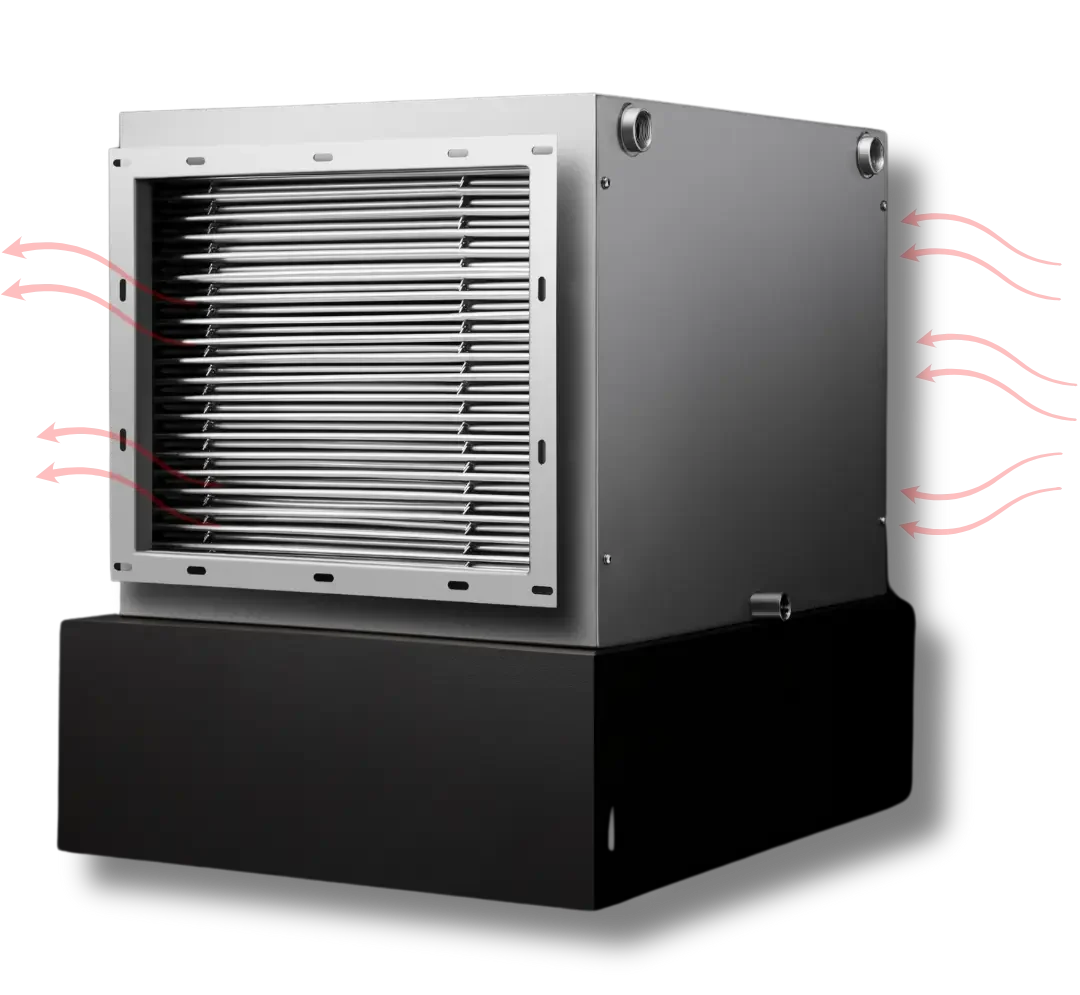
ThermStar heat recovery begins with patented Particle Repellent Geometry.
The open, staggered tubular arrangement supports contaminant pass-through and stable airflow where conventional fins or plates may foul.
Particle-laden exhaust enters
Lint, grease, dust or moisture, at process temperature, straight off the existing hood or stack. No pre-filtration stage is introduced ahead of the unit.
Air leaves without its heat, and with its particles
What arrives in the airstream carries on out of it. The operating objective is sustained useful recovery with a practical maintenance burden, within the approved application range.
Operating objective
Sustained useful recovery
Airflow
Stable pressure drop over time
Boundary
Within the approved application range
Closed loop heat recovery and flexible energy delivery
A closed loop heat recovery system can connect a source to a useful demand located elsewhere in the facility. This separation supports flexible routing and helps protect the receiving process from direct contact with the exhaust stream. A glycol loop heat recovery configuration may be selected where environmental and operating conditions make that fluid appropriate.
Controls and measured operation
ThermStar™ Power Intelligence™ manages operating logic, sensors, alarms, data and the performance calculation. What it reads is what gets reported.
Source air, in and out
The temperature either side of the heat recovery unit. The difference between the two is the energy taken out of the airstream, which is the number everything else is built on.
Loop supply and return
What the closed liquid-loop is actually carrying, against what the design case said it would. A drift between them is the first sign of anything wrong.
Fluid flow and run time
Circulation against the design case, and the hours in which the source and the demand actually coincide, the overlap, not the runtime of either on its own.
Calculated thermal energy
Recovered energy under the approved method, with status and alarms beside it. This is the figure an incentive process asks to see.
Configuration and deployment
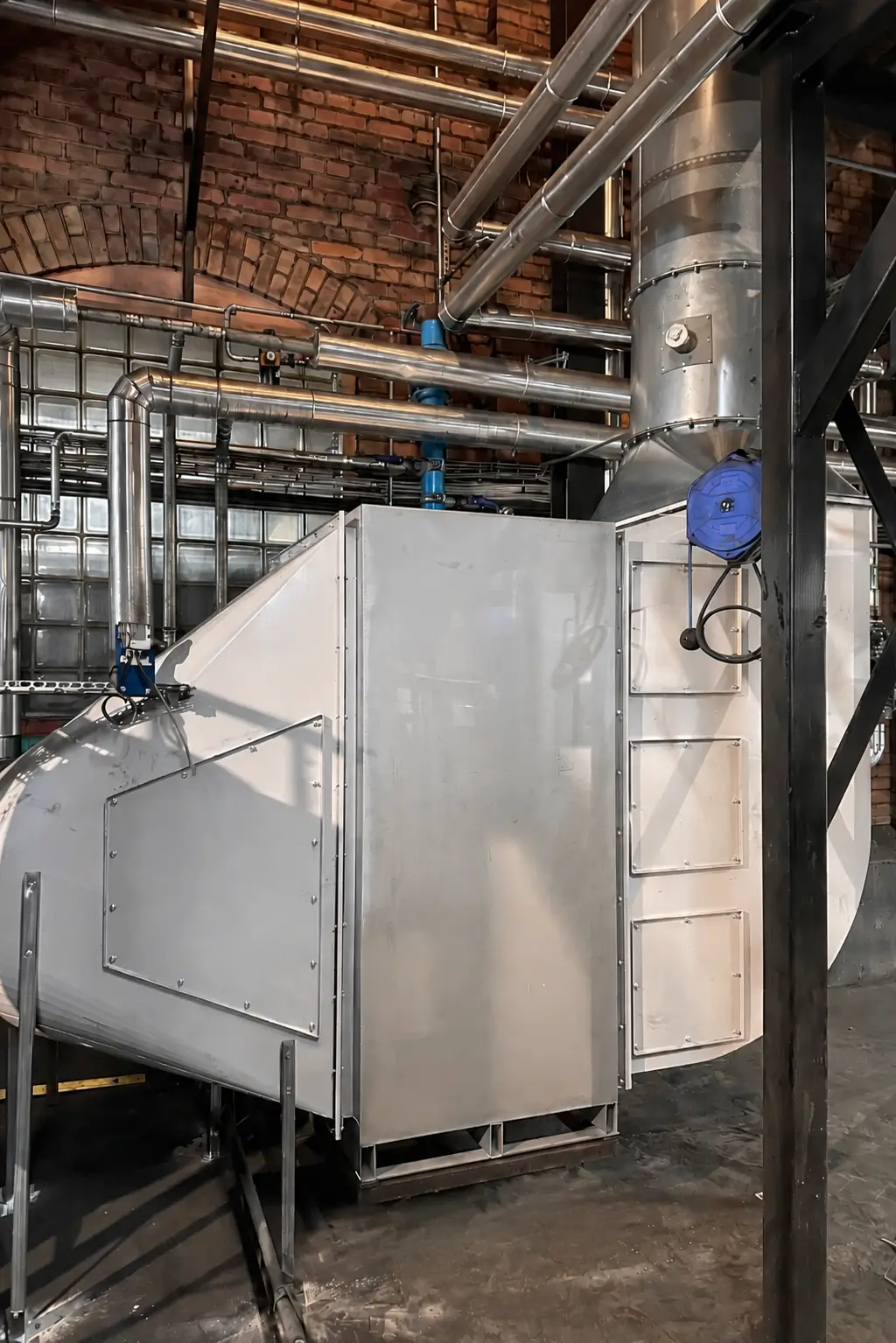
There is no standard installation. Each solution is configured around the source, the demand, the schedule, the site and what the project is for.
Our equipment, your project team
ThermStar supplies the recovery and delivery equipment, the controls, and the interface information each trade needs. Detailed design, permits, code compliance and the installation itself stay with the qualified professionals the customer appoints.
An installation follows the approved project documents and the responsibilities established for each participant, through technical review, proposal, integration planning, startup and measurement.
Evaluate your facility
The platform can serve a single exhaust source or form part of a broader energy program across multiple locations. Request an Assessment to identify the best available heat source, a productive use for the recovered energy, and the data required to evaluate the opportunity.
Can the ThermStar System be installed in an existing facility
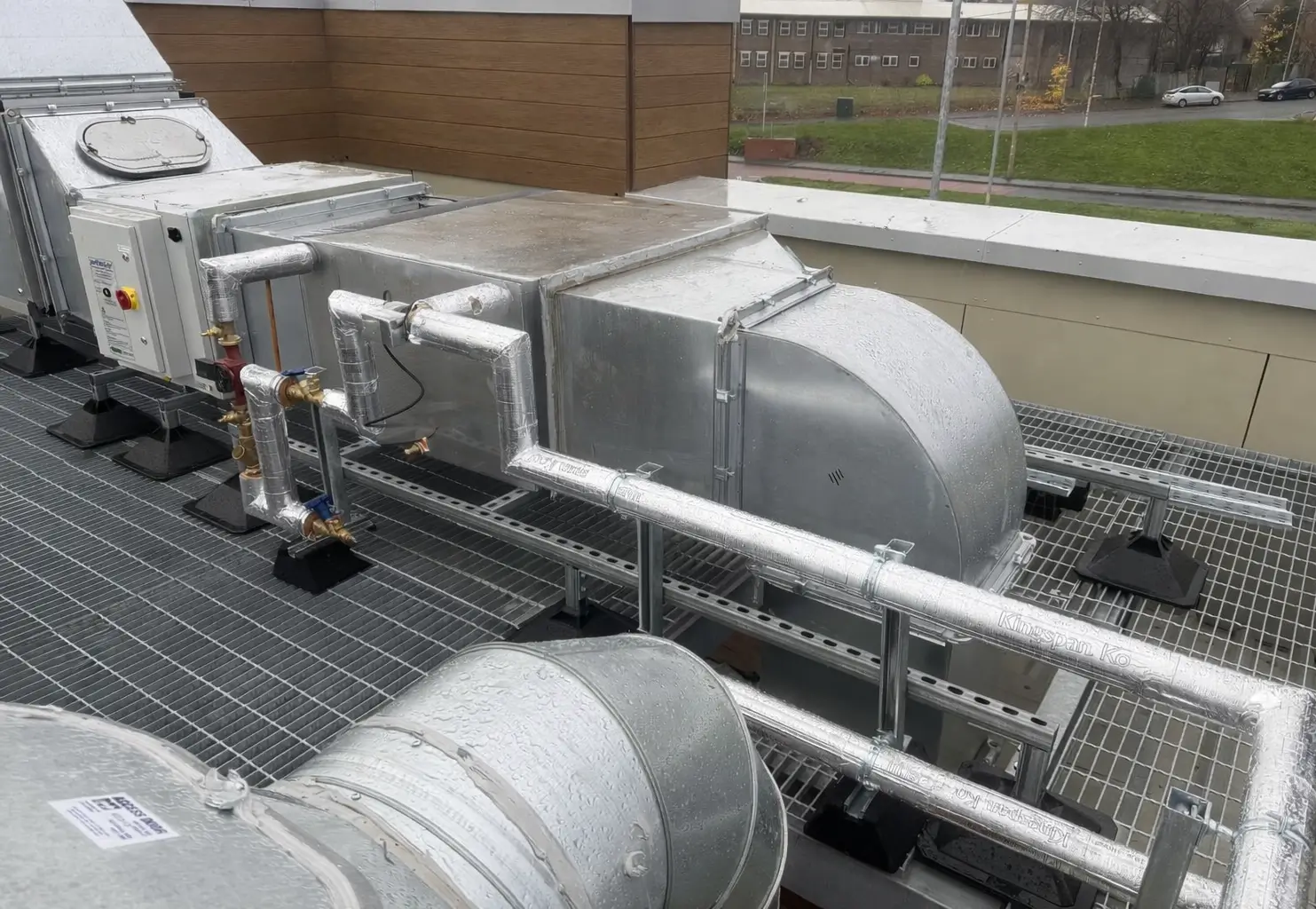
Yes, an existing facility can be evaluated when access, routing, controls, operating schedules, and tie in requirements are practical. The customer and its qualified project team determine the complete retrofit scope. ThermStar supports the approved recovery equipment and system interfaces defined for the project.
Can the ThermStar System deliver energy to more than one load
Potentially. A configuration may consider one or more receiving loads when their temperatures, capacities, schedules, locations, and control needs align with the available source. ThermStar evaluates the combined operating case before recommending an arrangement.
How is ThermStar System performance determined
Performance depends on measured or confirmed source conditions, useful demand, operating overlap, equipment selection, control behavior, and installed conditions. Available sensors and monitoring can document temperatures, flow, status, operating time, and calculated thermal energy according to the approved method.
Is the ThermStar System suitable for every exhaust application
No. Exhaust composition, concentration, temperature, humidity, pressure constraints, cleaning practices, materials, safety requirements, and facility standards must be reviewed. ThermStar confirms applicability against current approved technical information before proposing equipment.
Can exhaust contaminants reach the air or fluid being heated
No. The exhaust gives up its heat to a liquid inside the Lepido® unit and then leaves the system. The recovered energy travels through a closed fluid loop to the HeatCore Hx™ delivery unit, so exhaust air never mixes with the supply air, water or process fluid being heated.