Utility programs and energy efficiency incentives
Waste heat recovery can reduce the purchased energy required for a productive thermal load. ThermStar works with utilities and program administrators to explain the source, receiving demand, proposed configuration, operating assumptions, and method used to estimate savings. Final eligibility and incentive decisions remain with the applicable program.
Commercial energy efficiency incentives and program pathways
Projects may fit standard energy efficiency rebates for businesses, custom measures, demonstrations, innovation programs, or other funding structures.
Which one applies depends on the program, and ThermStar’s role is to get the project in front of it with the right information.
Incentives vary by program Commercial energy efficiency incentives
vary by territory, customer class, technology, fuel, baseline, timing, and program rules.
ThermStar assembles the information
ThermStar helps assemble relevant information without promising eligibility or funding.
Industrial support
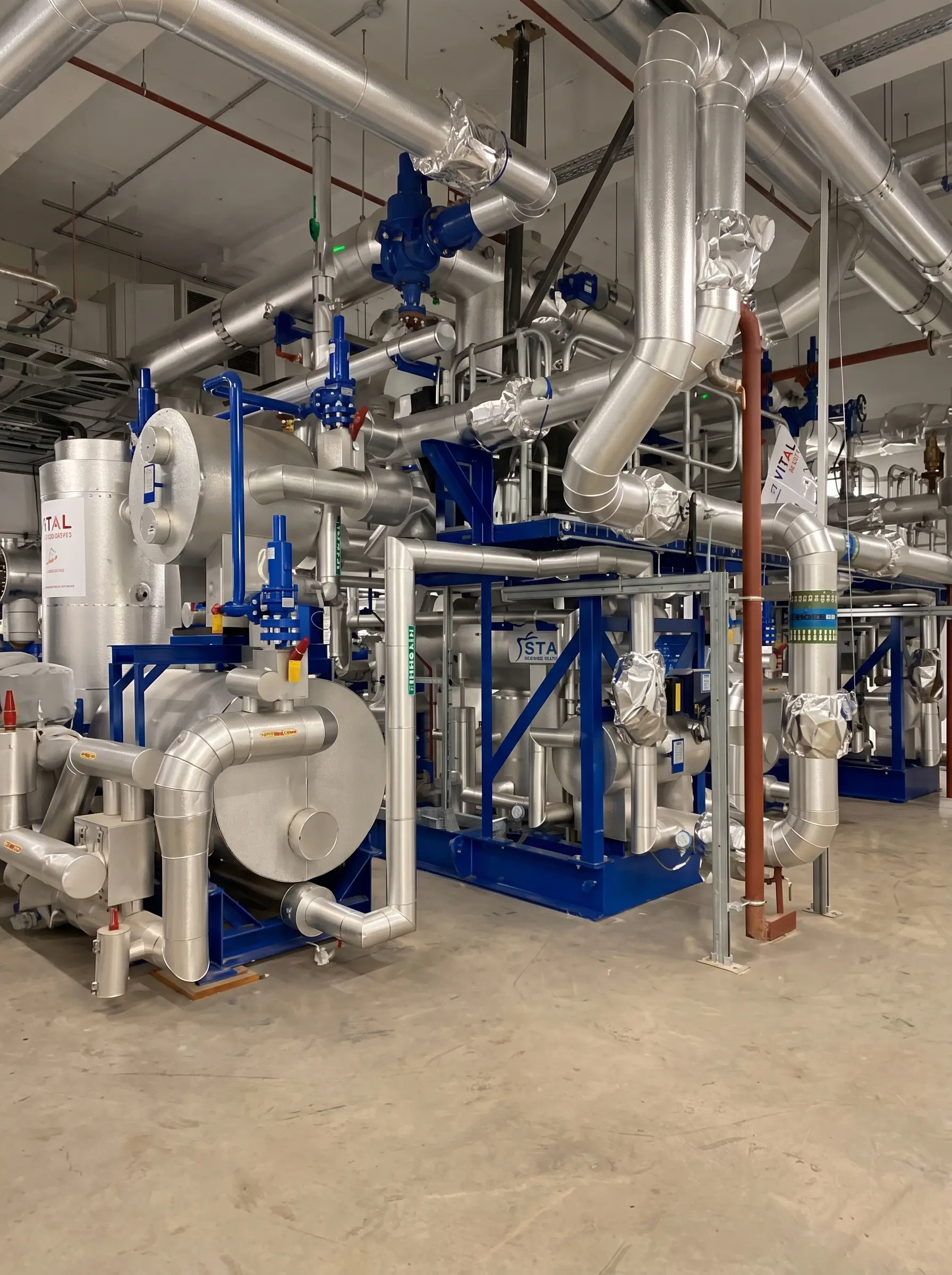
Industrial energy efficiency grants and utility programs may improve the economics of qualified projects. ThermStar can provide approved product information, source and demand analysis, preliminary calculations, controls descriptions, and available operating evidence.
Engineering or verification requirements established by the program remain with the responsible parties.

Savings methodology
The method should connect recovered thermal energy to the energy displaced. Inputs may include fluid flow, temperature difference, operating time, equipment status, baseline efficiency, and conversion factors approved for the project.
The program determines the required baseline, adjustment method, persistence period, and documentation.
Savings method: fluid flow times temperature difference times operating time equals recovered thermal energy. Divided by baseline efficiency and multiplied by conversion factors, that gives the energy displaced. The program decides the required baseline, adjustment method, persistence period and documentation.
The program decides
- Required baseline
- Adjustment method
- Persistence period
- Documentation
- Measured on site
- Approved for the project
- Set by the program
Measurement and reporting
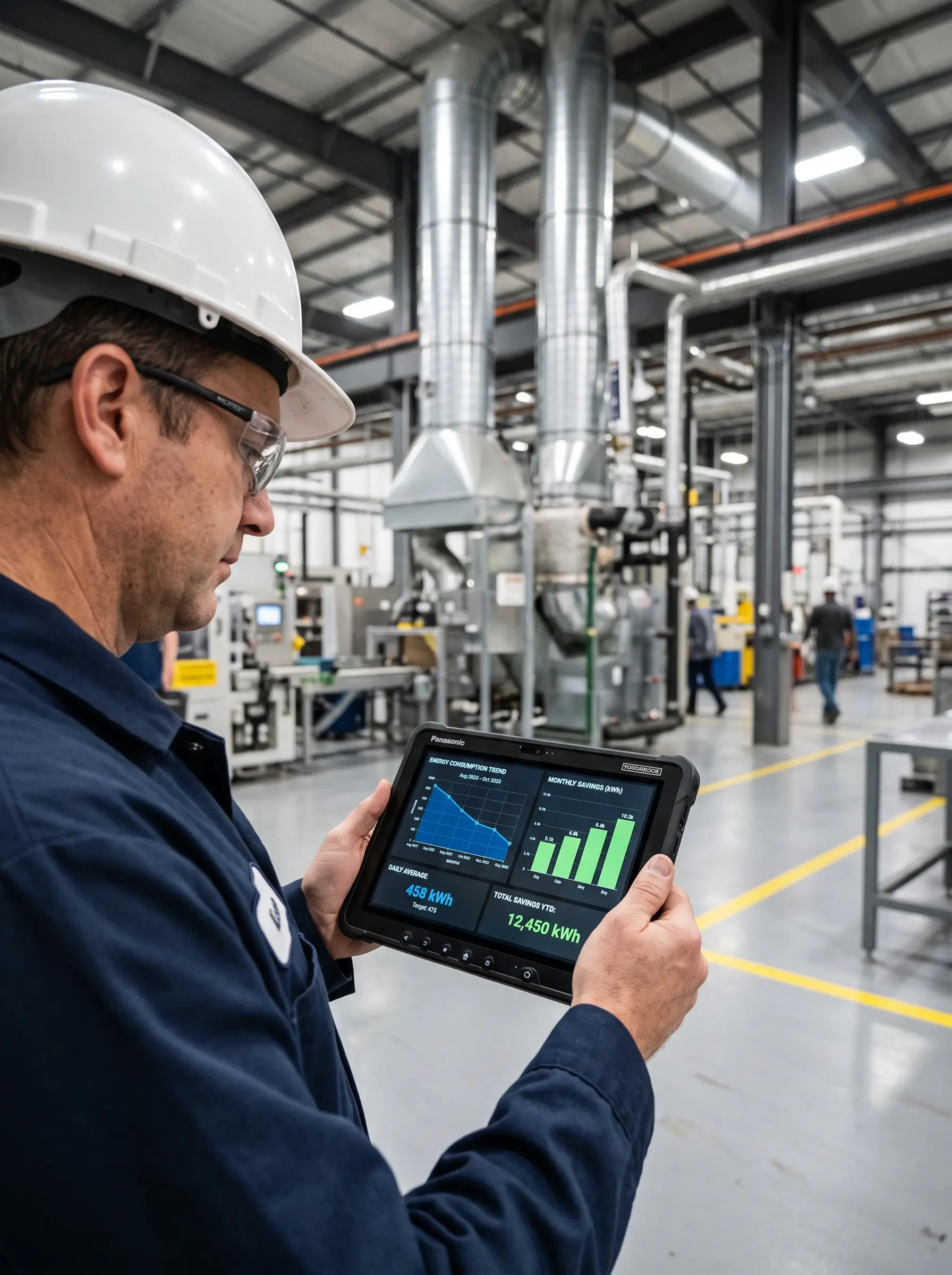
ThermStar™ Power Intelligence can collect available system data and support reporting. This may help document waste heat recovery incentives, confirm system operation, and provide information requested for payment or persistence review.
The final monitoring plan is configured to match the project and approved program requirements.
Collaborate on an opportunity
ThermStar serves North America, with Québec as an important initial market. Utilities, implementers, evaluators, and program administrators can contact ThermStar to review an application, technology pathway, or demonstration opportunity.
What happens next
A first conversation helps ThermStar understand the operating goal, the facility context, and the people involved in the decision. From there, the team can identify the smallest useful information request and determine whether a screen, technical review, partner discussion, or document request is appropriate.
This approach keeps the process proportionate to the opportunity while giving operations, finance, engineering, health and safety, and sustainability stakeholders clear information for the next decision.

Does ThermStar replace the utility or program relationship
No. Equipment manufacturers, engineering firms, distributors, contractors, utilities, and other partners retain their customer relationships and responsibility for their project scopes. ThermStar provides the approved technology, components, information, and support defined for the collaboration.
Can ThermStar support a custom incentive program
Potentially. The scope may include a source component, a more complete configuration, controls and monitoring, or related application support. Technical, commercial, documentation, and interface requirements are reviewed before a repeatable approach is established.
What information do utility programs need first
A useful first inquiry identifies the partner type, customer or market need, equipment or process involved, expected exhaust conditions, potential receiving load, project stage, geography, and desired ThermStar role. Detailed confidential information can follow under the appropriate arrangements.
How are incentive savings measured and reported
The savings method connects recovered thermal energy to the energy it displaces, using inputs such as fluid flow, temperature difference, operating time, equipment status, baseline efficiency, and approved conversion factors. ThermStar Power Intelligence can collect system data for reporting. The program sets the required baseline, adjustment method, persistence period, and documentation.